
 (Please let us have your feedback.)
 Loading...
In the fast Lane
Turkey — the bridge between Europe and Asia — is one of the most important export markets for the mechanical engineering industry. Being used there are extremely modern machine tools, especially in the rapidly growing sector of manufacturing automobiles and working vehicles.
Vehicle construction in Turkey is a relatively new branch of industry. Beginning in the 1960s, local vendors came into being and, as of the mid-1980s, multinational companies penetrated the market. The motor vehicles industry, initially anchored in the Bursa region, profited from a high level of direct foreign investment. Many of the privately owned Turkish production companies became subsidiaries of international car corporations or developed into Tier 1 suppliers.
In the wake of this success, the working vehicles industry had an easy start. Today, Turkey is Europe’s largest producer of utility vehicles and busses. Vehicle manufacturing in Turkey is concentrated in the meantime not only in Bursa but also in Istanbul, Izmir, Izmit and Adapazi and has sacrificed nothing of its dynamics. Major investments in the most modern manufacturing systems are characteristic of Turkish vehicle production. The German mechanical engineering industry also profits from this. In the year 2013 alone, it exported to Turkey merchandise valued at about 3.5 billion euros. Thus the country holds the 15th position among the industry’s most important export markets. Four examples offer a glance into the world of sheet metal on the Bosporus.
Positive Cutting
Reliable processes are indispensable for Beyçelik Gestamp A. Ş., a manufacturer of vehicle parts, located in Bursa. This enterprise, founded in 1978 by Falk Çelik, began as a job shop in 1983 for the automotive industry. In 2007 the Spanish Gestamp Automociòn Group purchased half of the shares. Beyçelik Gestamp employs a staff of 2,200 and delivers metal parts to renowned companies like Ford and Toyota. During three shifts, six days a week, batch sizes between 100 and 1,000 pieces leave the line. When it comes to laser cutting systems, Beyçelik Gestamp swears on machines built by TRUMPF. A 5-axis TLC 1005 laser cell and fi ve TruLaser 8030 Cell models are already in place in manufacturing operations, and two additional TruLaser Cell 8030 machines are to follow in the course of this year.
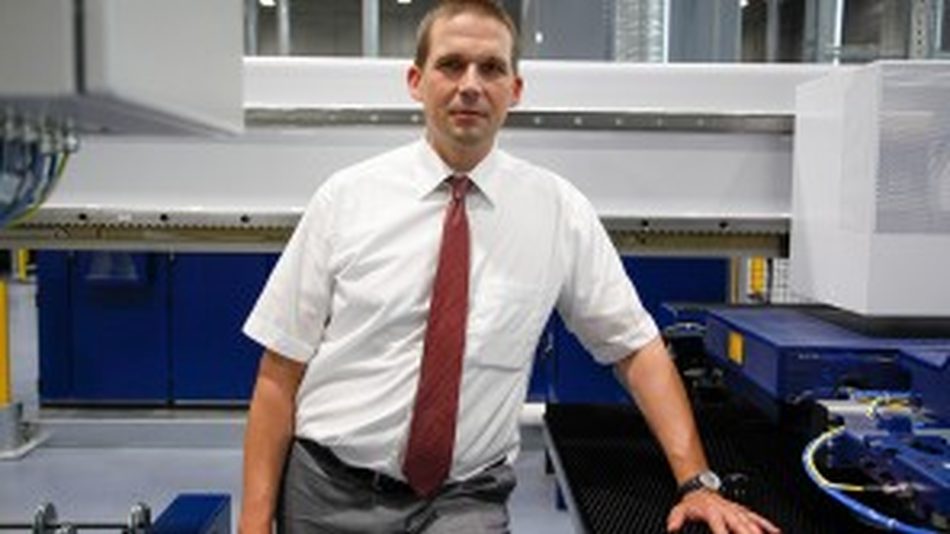
 “We took a close look at the specifications of a variety of machines in advance. Process reliability, cutting speed and quality, along with the short set-up times featured by TRUMPF machines were thoroughly convincing,” explains Kutlu Şahin, vice president at Beyçelik Gestamp. All the machines are equipped with an automatic loading and unloading system. “Our customers expect us to deliver not only the best quality, but a good cost-benefi t ratio. To make sure this happens, we constantly work on improving our processes,” says Şahin.
Large units made up quickly
Founded in 1965, the Koluman Holding is the largest Mercedes-Benz dealer in Turkey. Now a part of Koluman Holding is Koluman Otomotiv Endüstri A. Ş., located in Yenice, in the Mersin Province. The company, which was founded in 1999, produces trailers and superstructures. Its high-volume production includes articulated trailers, tankers, dumpers, concrete pumps and runway and road sweepers. With 450 employees, the company generated revenue of 30 million euros last year. Processed in two- and three-shift operations are steel, stainless steel and aluminum, in thicknesses of from 2 to 15 millimeters.
 “The CNC cutting processes are the most difficult work in our production operations and that is why we focus on the best possible cutting results and dependable processes,” reports Hakan Yaman, deputy general manager at Koluman Otomotiv Endüstri A. Ş. To achieve this, he uses a TruLaser 3060 and a TruLaser 5060, both made by TRUMPF. This machines are distinguished by a working range of 6,000 × 2,000 millimeters. “In addition to the cutting velocity, the machines’ capacity to cut a variety of materials was a primary reason for our selecting them,” Yaman explains. Over the long term, the company wants to establish itself as a global brand and, to achieve this, will continue to invest in the production site. Expanding the manufacturing facilities, taking lean production into account, is being planned for the upcoming years.
High-speed bending
Yarış Kabin, located in Balikesir, was founded in 1976 by three brothers: Hüseyin, Hasan and Nazmi Yarış. This company’s specialty is manufacturing cabs for agricultural and earthmoving machines. With revenues of 115 million euros last year, it is among the market leaders in this sector. The company employs about 1,000 workers, in two plants, with total floor area of 300,000 square meters and 70,000 square meters of production space. For executive Nazmi Yarış, the daring to undertake even major investments is one key to his company’s success.
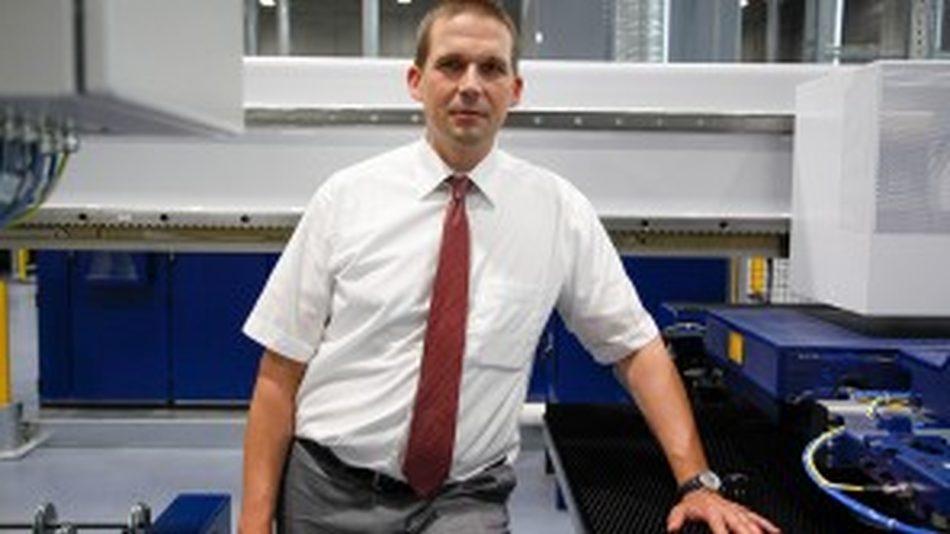 When taking up automated bending, Yarış Kabin decided on a TruBend Cell 5000 as well as the high-speed bending cell, the TruBend Cell 7000. “With these machines we were able to slash by 60 percent the time needed for bending. In addition, we need fewer operators and automation guarantees the best part quality,” explains Ömer Arabacı, metal processing manager at Yarış Kabin. He adds: “Our aim is to supply the highest-quality products at minimum cost, even to the most demanding customers. That is possible only with the most modern technology.”
Reliable manufacturing
Mercedes-Benz Türk A. Ş., with an investment volume of 885 million euros, is one of Turkey’s largest direct investors. It has been on hand in this country since 1976 — at that time operating under the “Otomarsan” name.
Located at the Hosdere site, in Istanbul Province, is one of the world’s most modern bus production facilities. Also to be found there is the Mercedes-Benz Türk R&D Center, a development complex for buses and trucks and one of the most important in the globe-spanning R&D network.
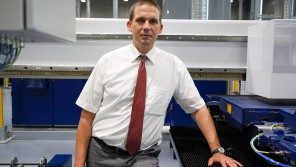 In production at Hosdere since 1995 are the Conecto public transit bus and the Travego, Tourismo, Intouro and Setra UL Business overland bus models. The company is the largest bus exporter to Western Europe. Eighty percent of production output is destined for export.
To make about 12,000 parts, of which 4,500 go directly to the assembly lines, the firm works steel between 0.75 and 15 millimeters in thickness, aluminum and stainless steel from one to two millimeters, and galvanized sheet metal at gauges of 0.75 to two millimeters. Lot sizes of from 20 to 1,200 items are turned out in two shift s. In the search for a precise and efficient punching machine, Mercedes-Benz Türk as early as 1992 chose a TRUMATIC 260 ROTATION machine and, since then, has continuously expanded the number of TRUMPF machines in this plant. “We boost our production capacities every year and, as a result, our inventory of TRUMPF machines continues to expand,” says Nusret Kanat, technical service bus at Mercedes-Benz Türk in Instabul. In addition to seven 2D laser cutting machines, there are two TRUMATIC 500 ROTATION units along with two TruPunch 5000 machines in service. An additional TruPunch 5000 is slated to be purchased this year. “Only by drawing on the best technology available we can manufacture dependable products. We also require efficient machines, so that we can deliver at favorable prices,” Kanat explains.
Any questions?
Contact us: MastersofSheetMetal@trumpf.com
This article was first published in autum 2015.

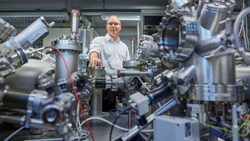
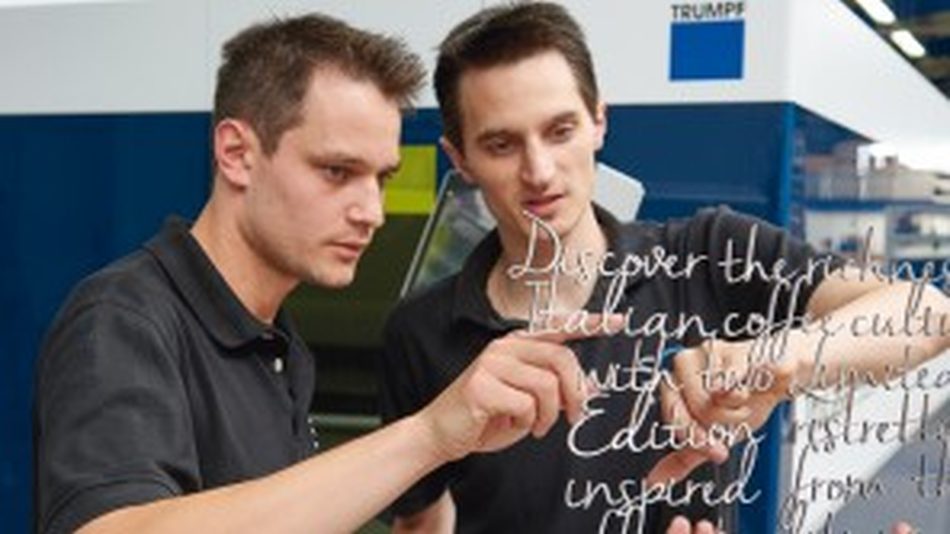
 As a result of the investment in high-speed bending cells, Ömer Arabacı, metal processing manager at Yarış Kabin, was able to reduce the time needed for bending by 60 percent.
 Mercedes-Benz Türk A. Ş. is the largest exporter of buses to Western Europe. The rise of production capacities parallels the climb in the inventory of TRUMPF machines. “Only with the best technology can dependable products be manufactured,” says Nusret Kanat, technical service bus at Mercedes-Benz Türk in Istanbul.