 (Please let us have your feedback.)
 Loading...
“This layer is well worth it”
When machining galvanized sheet metal, galling or cold welding can damage the zinc layer on the part, after just a few bends. K-Metall GmbH in Oelsnitz, Germany, has put an end to all that by installing a LASERdur ZN coated die. Proprietor Sven Kölbel tells us about how he uses the tool and explains why this coating has paid for itself after just a short period of time.
Where do you use galvanized sheet metal?
Sven Kölbel: This is used primarily for out-door gutters, which is one of our own products. But mechanical engineering products that were made of stainless steel years ago are now being made up from galvanized sheet metal.
What problems are encountered when you process it?
Right after a few bends zinc collects on the die insertion radii, and that leads to galling. Even if these areas are really tiny, there will be damage to the sheet metal surface. This is complicated by angular tolerances of plus/minus one degree so that precise bending is no longer possible. To avoid this problem, we had to clean the die segments continuously and that, of course, meant non-productive machine time.

Dies coated with LASERdur ZN keep the galvanized zinc layer intact.
Are machine idle times really so significant?
The time it takes to clean a complete standard die set is about 90 minutes. It can sometimes require two hours, though. This means that a skilled worker has to spend about 25 percent of his working time on cleaning work. And this outlay happens all the time, even when smaller batches are being produced. Where the production runs are long, the time needed to clean the tools in between is added, so that bending quality is always good.

Die coated with LASERdur ZN after making 3,000 bends (left). Standard die with zinc deposits after making 300 bends.
Beginning last year you have used a LASERdur ZN coated die set with a die width of ten millimeters. What changes came about?
We use the die set both on our TrumaBend V320 and our new TruBend 5320, machining materials from 1.0 to 1.5 millimeters in thickness. And to clean the die you only need to wipe off the tool’s surfaces with a cloth. That’s quick!
Does this mean that the coated die pays off for you?
That’s right. The additional cost for the LASERdur ZN coating quickly amortizes itself. In addition to the time savings — which are considerable — we are also easier on our standard dies. That is because using fleece s or scrapers in the past obviously caused wear. And so you have to include the longer service lives in the overall equation.
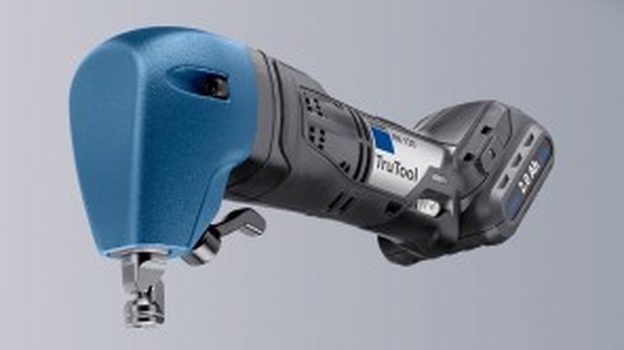
K-Metall uses the die set both on their TrumaBend V320 and their new TruBend 5320, machining materials from 1.0 to 1.5 millimeters in thickness.

Cold welds on standard dies lead to angle deviations. Dies coated with LASERdur ZN guarantee precise manufacture even after many bends.
So that means, all in all, that you’re satisfied with the coated die?
For sure. We process a range of parts that certainly justifies the additional investment in the die. It’s a question of time savings, increased tool service lives, and improved parts quality thanks to manufacturing operations that can be precisely repeated. That was more than convincing for us.
Any questions?
Contact us: MastersofSheetMetal@trumpf.com
This article was first published in spring 2016.

 „A skilled worker spent up to 25 percent of his shift cleaning a set of standard dies. That is time that we now save.“